





You reach for your phone to check the time. Before you can put it down, you’ve opened three social media apps, watched two short-form videos, read a news headline, and replied to a text. Ten minutes have vanished.
If this sounds familiar, you are not alone, and you are not weak. You are simply experiencing the designed outcome of the most sophisticated attention-harvesting technology in human history.
As we navigate 2026, the digital landscape has evolved. Algorithms are no longer just suggesting content; they are hyper-personalized, AI-driven engines capable of predicting your emotional state and feeding you the exact stimulus required to keep your eyes glued to the screen. The result is a global epidemic of fractured attention, chronic mental fatigue, and a baseline dopamine system that is completely out of balance.
But there is a way out.
Digital Minimalism is not about throwing your smartphone in the ocean or moving to a cabin in the woods. It is a philosophy of technology use that helps you clear away the digital clutter and intentionally focus on the tools and activities that truly add value to your life. Combined with a strategic Dopamine Detox, it is the most effective way to reclaim your focus, restore your mental clarity, and take back control of your time.
In this comprehensive, science-backed guide, we will explore the neuroscience of digital addiction, debunk the myths of dopamine fasting, and provide a step-by-step, 30-day protocol to reset your brain and build a sustainable, minimalist digital lifestyle in 2026.
Part 1: The Neuroscience of Digital Addiction (Why You Can’t Look Away)
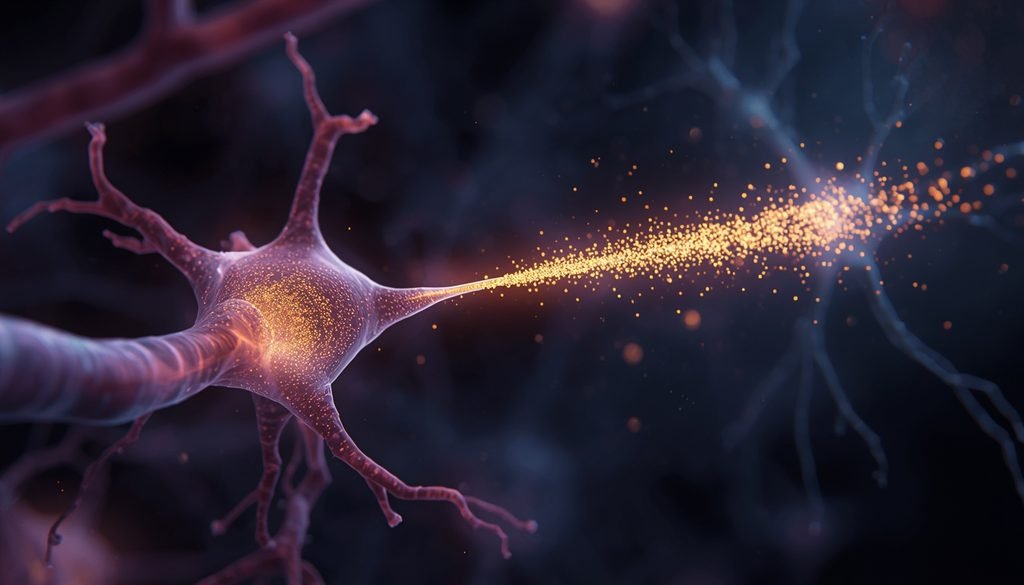
To break the habit, you must first understand the biological mechanism driving it. It all comes down to a neurotransmitter called dopamine.
The Dopamine Misconception
Dopamine is often mistakenly called the “pleasure molecule.” In reality, dopamine is the molecule of motivation, craving, and anticipation. It is released not when you get a reward, but when you anticipate a reward. It is the chemical that drives you to seek out food, social connection, and novel information.
The “Slot Machine” in Your Pocket
Social media platforms, short-form video apps, and even modern news feeds utilize a psychological principle called Variable Ratio Reinforcement. This is the exact same mechanism used in slot machines.
When you pull down to refresh your feed, you don’t know what you’re going to get. It might be a boring post, or it might be a hilarious video, a shocking news update, or a message from a crush. This unpredictability causes your brain to release massive spikes of dopamine. You keep pulling the lever (refreshing the feed) because your brain is chasing the next dopamine hit.
The 2026 AI Advantage
In 2026, this process has been supercharged by Artificial Intelligence. AI algorithms now analyze your micro-interactions—how long you hover over an image, the speed at which you scroll, your pupil dilation (via front-facing cameras on some devices), and your typing cadence. The AI builds a real-time psychological profile and serves you content with surgical precision, ensuring your dopamine taps are never empty.
The Crash: Dopamine Downregulation
When you constantly flood your brain with “cheap” dopamine from screens, your brain attempts to maintain homeostasis (balance) by reducing the number of dopamine receptors. This is called downregulation.
The result?
- Tolerance: You need more screen time to feel the same level of engagement.
- Withdrawal: When you put the phone away, your dopamine levels drop below baseline, causing irritability, anxiety, and a profound sense of boredom.
- Anhedonia: A reduced ability to feel pleasure from everyday, low-stimulation activities like reading a book, having a deep conversation, or taking a walk.
Part 2: The True Cost of Constant Connection

The impact of this continuous digital stimulation extends far beyond just “wasting time.” It fundamentally alters your cognitive and emotional baseline.
1. The Destruction of Deep Focus
Cal Newport, a computer science professor and author, defines “Deep Work” as the ability to focus without distraction on a cognitively demanding task. In 2026, the average human attention span has shrunk dramatically. Constant context-switching (moving from an email to a text to a video) leaves behind what psychologists call “attention residue.” Your brain never fully engages with the task at hand because a part of it is still processing the previous digital distraction.
2. The Mental Health Toll
There is a well-documented, strong correlation between heavy social media use and increased rates of anxiety, depression, and loneliness. The “highlight reel” culture of digital life fosters toxic social comparison. Furthermore, the blue light emitted by screens suppresses melatonin production, leading to poor sleep quality, which is a primary catalyst for mental health struggles.
3. The Loss of Solitude
Solitude is the state of being alone with your own thoughts, free from external inputs. It is in solitude that we process our emotions, solidify our identity, and generate creative ideas. Smartphones have eradicated solitude. We now fill every micro-moment of boredom—waiting in line, sitting on the toilet, riding the elevator—with digital noise. Without solitude, we lose the ability to self-reflect.
Part 3: What is a Dopamine Detox? (Myth vs. Reality)

The term “Dopamine Detox” was popularized by Dr. Cameron Sepah, a psychiatrist who based the concept on Cognitive Behavioral Therapy (CBT). However, the internet has heavily misunderstood it.
The Myth: A dopamine detox means you must sit in an empty room, stare at a wall, and completely eliminate all joy and stimulation for a week to “reset” your dopamine to zero. (This is biologically impossible and psychologically harmful).
The Reality: A dopamine detox is actually an impulse control exercise. It is about temporarily abstaining from specific, high-dopamine, compulsive behaviors (like doomscrolling, binge-watching, or eating junk food) to break the compulsive loop. The goal is not to lower your dopamine; the goal is to reset your baseline so that you can once again find joy and motivation in low-stimulation, high-value activities.
Part 4: The 30-Day Digital Minimalism Protocol
Reclaiming your focus is not a one-day event; it is a structured process. This 30-day protocol is divided into three distinct phases.
Phase 1: The 24-Hour Hard Reset (Days 1-2)
The first step is to break the physical and psychological loop. This is a short, intense period of complete abstinence from non-essential digital inputs.
The Rules for 48 Hours:
- No social media, no news, no YouTube, no video games.
- No entertainment streaming (Netflix, Spotify, etc.).
- No unnecessary screen time. (You may use your computer for work if absolutely necessary, and your phone strictly for calls, maps, and emergency texts).
What to Expect: You will experience “withdrawal.” You will feel phantom vibrations in your pocket. You will reach for your phone unconsciously. You will feel intensely bored. Embrace the boredom. Boredom is the signal that your brain is beginning to reset its baseline.
What to do instead:
- Go for a long walk without headphones.
- Read a physical book.
- Cook a complex meal from scratch.
- Journal your thoughts on paper.
- Have a face-to-face conversation with a friend or family member.
Phase 2: The 7-Day Dopamine Fast (Days 3-9)
Now that the initial compulsive urge has been broken, we extend the fast to a full week, but we introduce a bit more structure.
The Rules:
- Continue the restrictions from Phase 1.
- Introduce “Friction”: Make your bad habits incredibly difficult to do.
- Delete all social media and entertainment apps from your phone. (You can still check them on a desktop computer if you must, but the friction of logging in will stop mindless scrolling).
- Turn your phone screen to Grayscale (Black and White). This strips the vibrant, dopamine-triggering colors from your apps, making them look like boring utilities.
- Turn off all non-human notifications. If a real person isn’t trying to contact you, your phone shouldn’t buzz.
The Goal: By day 5 or 6, you will notice a shift. The “brain fog” will start to lift. You will find yourself looking at the sky, noticing details in your environment, and feeling a renewed sense of patience. Your dopamine receptors are beginning to upregulate.
Phase 3: The 30-Day Intentional Reintroduction (Days 10-30)
Digital minimalism is not about permanent abstinence; it is about intentionality. In this final phase, we carefully reintroduce technology, but only on your terms.
Step 1: Define Your Core Values Write down the 3 to 5 things that matter most to you (e.g., family, career growth, physical health, creative hobbies).
Step 2: The “Does it Serve?” Test For every app, website, or digital tool you want to bring back, ask: Does this directly support one of my core values?
- If you use Instagram to promote your small business, it serves your career. Keep it, but set a strict 15-minute time limit.
- If you use TikTok just to kill time, it does not serve your core values. Leave it deleted.
Step 3: Establish “Digital Boundaries” Create strict rules for when and how you use technology.
- No phones in the bedroom: Buy a cheap digital alarm clock. Charge your phone in the kitchen overnight.
- No screens for the first and last hour of the day: Protect your morning routine and your sleep hygiene.
- Designated “Tech Times”: Only check email and social media at specific times (e.g., 12:00 PM and 5:00 PM).
Part 5: Environmental Design for the Digital Age
Willpower is a finite resource. If you rely solely on willpower to resist your phone, you will eventually fail. The secret to digital minimalism is environmental design—setting up your physical space so that the good habits are easy and the bad habits are impossible.
1. Create “Phone-Free Zones”
Designate specific areas in your home where screens are strictly forbidden. The dining table and the bedroom are the most critical. When you enter these zones, your brain will eventually associate them with relaxation and connection, rather than digital stimulation.
2. The “Physical Phone Jail”
When you need to do deep work, studying, or spend quality time with family, put your phone in a physical lockbox or a drawer in another room. The physical distance breaks the psychological tether.
3. Optimize Your Wearables
Smartwatches are incredible health tools, but they are also wrist-mounted distraction machines. Turn off all notifications on your smartwatch except for phone calls and calendar reminders. Your wrist should not be buzzing with news alerts and social media likes.
4. Curate Your Home Screen
Your phone’s home screen should only contain tools, not slot machines.
- Keep: Maps, Calendar, Notes, Weather, Uber, Banking.
- Remove: Social media, News, Games, Streaming apps. (Move these to a hidden folder on the last page of your phone, or delete them entirely and use the browser versions).
Part 6: Rebuilding Your Attention Span (Deep Focus)
Once you have detoxed from cheap dopamine, you must actively train your brain to focus again. Attention is like a muscle; if you haven’t used it in years, it will be weak. You must rehabilitate it.
1. The Progressive Overload Method for Focus
Do not try to focus for 4 hours on day one. Start small.
- Week 1: 20 minutes of deep work, followed by a 5-minute break.
- Week 2: 30 minutes of deep work, followed by a 5-minute break.
- Week 3: 45 minutes of deep work, followed by a 10-minute break.
- Week 4: 90 minutes of deep work (a full ultradian cycle).
2. Practice “Productive Meditation”
This is a concept where you take a period of physical activity (walking, driving, showering) and focus your attention on a single professional or personal problem. When your mind wanders to what you’re going to eat for dinner, gently bring it back to the problem. This trains your brain to resist distraction.
3. Embrace Boredom
When you are waiting in line at the grocery store, do not pull out your phone. Stand there and be bored. Let your mind wander. This practice of “staring at a wall” is actually a profound exercise in attention control. It teaches your brain that it can survive without constant external stimulation.
Part 7: Digital Minimalism for Families and Teens
If you have children or teenagers, implementing digital minimalism as a family is crucial. The developing brain is significantly more susceptible to dopamine loops and social media addiction.
1. Lead by Example
Children do not do what you tell them to do; they do what you do. If you are constantly scrolling on your phone while telling them to read a book, they will resent the rule. Implement family-wide screen-free times.
2. Delay Smartphone Ownership
There is a growing movement in the US and UK called “Wait Until 8th,” where parents pledge not to give their children smartphones until at least 8th grade. If a child needs a phone for safety, give them a “dumb phone” (a flip phone or a light phone) that only makes calls and sends texts.
3. Family Dopamine Detox Weekends
Once a month, designate a weekend (e.g., Saturday morning to Sunday evening) as a “Family Tech Sabbath.” Put all devices in a basket. Go hiking, play board games, cook together, or visit a museum. Show your children that life is vibrant and fun without a screen.
Conclusion: Reclaiming Your Life in 2026
Technology is a brilliant servant but a terrible master. The digital tools of 2026 offer unprecedented convenience, connection, and access to human knowledge. But if you are not careful, they will quietly steal your attention, fracture your focus, and rob you of your presence in the real world.
Digital minimalism is not a rejection of technology; it is a reclamation of your humanity. It is the conscious decision to use technology to support your life goals, rather than allowing technology to use you to achieve its own corporate goals.
The 30-day dopamine detox and digital minimalism protocol outlined above will not be easy. The first few days will be uncomfortable. You will feel the itch of boredom. But on the other side of that discomfort lies a profound sense of clarity, a renewed ability to focus, and the deep, quiet satisfaction of a life lived intentionally.
Your attention is the most valuable asset you own. It is the currency of your life. Stop spending it on things that do not matter. Start investing it in the people, passions, and pursuits that do.
Frequently Asked Questions (FAQ)
1. Will a dopamine detox cure my ADHD or clinical depression? No. A dopamine detox is a behavioral tool to improve focus and reduce compulsive habits. It is not a medical treatment. If you suspect you have ADHD, clinical depression, or severe anxiety, please consult a licensed medical professional or psychiatrist. Digital minimalism can be a helpful complementary practice, but it does not replace professional medical care.
2. Do I have to give up my smartphone completely? Absolutely not. Digital minimalism is about intentionality, not abstinence. The goal is to transform your smartphone from a source of endless entertainment into a highly efficient utility tool. You keep the apps that make your life easier and delete the apps that steal your time.
3. How long does it take for dopamine receptors to reset? While the exact timeline varies from person to person, neuroplasticity research suggests that it takes about 14 to 30 days of abstaining from a compulsive behavior for the brain’s dopamine receptors to begin upregulating (returning to a normal baseline). This is why the 30-day protocol is highly effective.
4. What should I do if I relapse and binge on social media? Forgive yourself immediately. Guilt and shame are negative emotions that will only drive you back to the screen for comfort. Acknowledge the slip-up, analyze what triggered it (were you stressed, tired, or bored?), adjust your environmental boundaries to prevent it next time, and continue with the protocol. Progress is not linear.
5. Is listening to podcasts or audiobooks considered “cheap dopamine”? It depends on how you use them. If you are listening to an educational podcast while walking, exercising, or doing chores, it is a great use of time. However, if you are using audiobooks to avoid being alone with your thoughts during a commute, it might be hindering your ability to practice solitude. Use them intentionally, not as a constant background noise to avoid boredom.
6. How do I handle work requirements that demand I be on my phone or computer all day? If your job requires heavy screen time, you must be ruthless about your off-screen time. Implement strict boundaries: no screens during lunch breaks, no phones in the bedroom, and dedicated screen-free hours in the evening. Use blue-light-blocking glasses and the 20-20-20 rule (every 20 minutes, look at something 20 feet away for 20 seconds) to reduce eye strain and cognitive fatigue.
Disclaimer: The information provided in this article is for educational and informational purposes only. It is based on general principles of neuroscience, psychology, and digital wellness. It does not constitute professional medical, psychiatric, or psychological advice. If you are struggling with severe mental health issues, addiction, or cognitive disorders, please seek the guidance of a qualified healthcare professional.